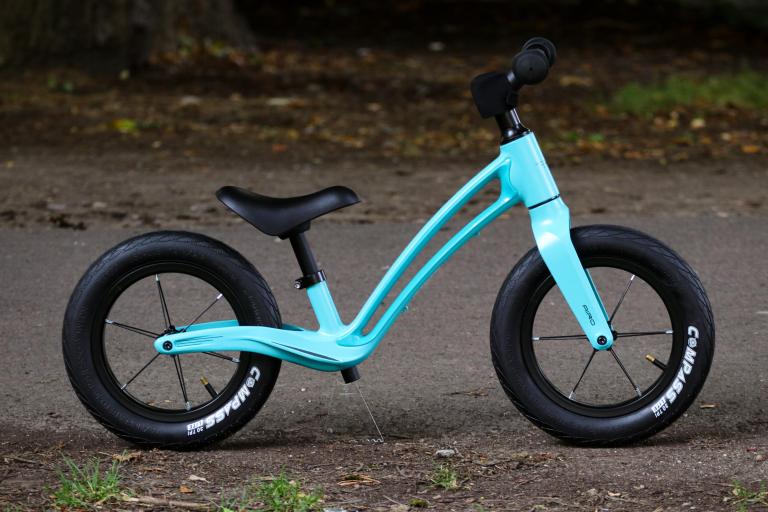
Bringing little people into the world of two wheels is daunting and requires incredible patience, not to mention giving up a few beautiful Saturday morning rides on your own because Read this post you’re so dedicated to getting your kid riding. While there are lots of fine balance bikes out there, and most will get your kid the taste they need to see if they even like riding a bike (to the horror of bike enthusiast parents who discover their kid just isn’t into it). But as always, some products stand out above the others and it’s the little things—the smart design and use of quality materials—that will make getting your tyke to like to ride that much easier.
We researched dozens of bikes and ended up calling in six to try out for ourselves. Our young tester started when she was approaching two years of age and had never ridden before this. Once she got the hang of it she grew to love riding around on her own and was happy to switch amongst the various bikes, but a favorite clearly emerged. Fortunately, the kid tester and parent choice of bikes was the same: the Specialized Hotwalk.
Our Winner: Specialized Hotwalk
There were a number of things going for the Hotwalk (available in a boy’s and girl’s frame) to bring it to the top. First, and this was also true of the Joovy Bicycoo (which came in at a close second) was the pneumatic (air filled) rubber tires versus the foam rubber tires of the other bikes we tested. The foam tires do have their place by being lighter and puncture proof and they’re great if your rider is going to stick to paved or very smooth surfaces.
Here in our testing grounds of Boulder, Colorado we have an amazing public riding resource, the Valmont Bike Park. This park is a series of pump tracks, dirt trails and even some big jumps. Although the pneumatic tires are a little heavier, they do provide for a much more comfortable ride on the trail. While many of the trails are smooth dirt where the foam tires worked fine, there were trails with textured elements favoring the softer ride.
Also, the pneumatic tires stuck to the ground better once our little tester gained confidence and took the corners faster. Finally, so that we didn’t always have to go to the bike park, I carved out a little single-track loop in our backyard where there were roots and tufts of grass to contend with. Again, the forgiving pneumatic tires proved the favorite.
Another great feature of the Hotwalk is the generous and easy-to-find footrest. Once our tester found her comfort with gaining a good amount of speed either by self propelling or by braving bigger and bigger hills, she was more comfortable with having a place to put her feet to keep them off the ground. Connected to the front end of what would be the chainstay arm are two nicely sized platforms (one on each side) with coarse grit non-slip pads. These are placed in a natural and intuitive location for our rider to easily find where to rest her feet without having to look down.
The only other bike in the test with a foot rest was the Strider 12 Sport, but these were placed a little further back and not as intuitive for our tester to find as on the Hotwalk. The Strider 12 Pro version does include a better footrest and is promoted as a way for the rider to more easily stand on the bike while riding to pump and/or jump. Our tester never quite got to that… yet. The argument against the footrest is the need for smaller riders to get their short legs past it. But, in most cases, they’ll grow.
The other great qualities of the Hotwalk, which are not entirely exclusive to the Hotwalk are the quality comfortable seat, rubber handlebar grips, sturdy aluminium frame, comfortable geometry, ane quality materials across the board.
The cons of the Hotwalk start off with its 9.5 pound weight, which is not horrible since that puts it in the median range for these kinds of bikes—the Strider 12 Sport is 6.7 pounds, the Pro 5.6 pounds. Weight is worth considering if your kid is particularly petite for their age. The Hotwalk also requires a hex key to adjust the seat height. This is minor considering you’ll only need to make this change as the child grows, but where we found it frustrating is when friends wanted to borrow the bike, it wasn’t easy to make that fix.
Hex key required to adjust both the seat height as well as another one for the handlebars on the Hotwalk.
The quick release lever to adjust the height of the seat of the Strider 12 Sport—also set up on the handlebar.
Only the Strider 12 Sport and Miir Youth Bambini Bike in our test had the quick release seat adjustment. Finally, the straight Schrader valve stem is hard to get a bike pump on considering the tight constraints of spokes amongst the small 12-inch wheel. The Joovy Bicycoo has a bent valve stem making it much easier to manage tire pressure. Granted, we didn’t really need to do this very often, but it was much easier—and seems an easy fix on the part of Specialized—on the Bicycoo. Finally, at $175, the Hotwalk is the priciest model we tested. All the other bikes we tested are priced right around the $120 mark save the Bicycoo at $130.
Runner Up: Joovy Bicycoo
For that extra ten bucks the Bicycoo is a steal. Not only are the tires pneumatic, they are also extra wide. It’s practically a kid’s fat bike and it gets noticed and commented on as such at the bike park. It also comes with a hand break. While it seemed ridiculous to us at first when our tester was so small she could barely get her hands around the grip, once she got older and her hands got bigger she really enjoyed having the hand break and learned how to skid out the rear wheel.
 Site Title
Leave a comment